

Blog
How to Set Up a Low-Dopamine Nighttime Bedroom Setup

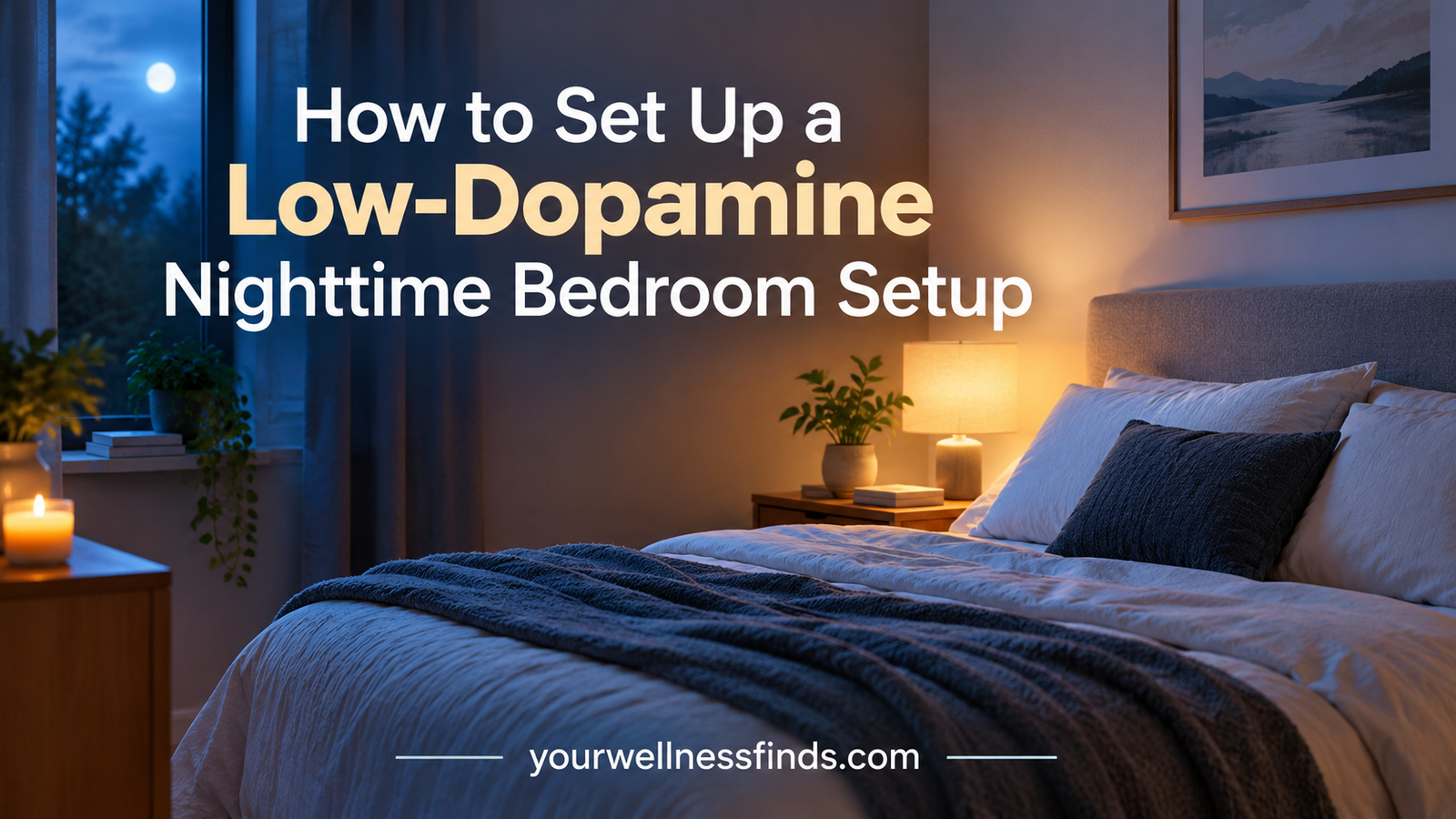
Does your bedroom feel more like a screen arcade than a place to rest? Phones, TVs, notifications, and bright lights can keep your brain busy long after you want to sleep. A low-dopamine bedroom setup helps you wind down by removing the things that keep pulling at your attention.
Quick answer: A low-dopamine bedroom is a calm, simple sleep space with fewer stimulating things in it. Move your phone and other screens out of reach, dim the lights, keep the room cool, dark, and quiet, and replace scrolling with slow activities like reading a paper book or stretching. You don’t need to remove everything at once. Start with the phone and the lighting, since those usually make the biggest difference.
Why a Low-Dopamine Bedroom Matters for Sleep and Digital Detox
Dopamine is a brain chemical linked to motivation, reward, and wanting more. Apps, videos, games, and endless feeds are designed to keep you tapping and scrolling. That constant stream of small rewards can make it hard to settle down at night.
“Low-dopamine” is a popular wellness term, not a medical one. You can’t lower your dopamine on purpose in any scientific sense. What you can do is cut down on high-stimulation habits before bed so your mind has room to relax. That is the real goal here.
A calmer bedroom may help you:
- Fall asleep with less mental chatter
- Spend less time scrolling late at night
- Build a clear link between your bed and rest
- Feel less wired in the evening
- Start the next morning with a clearer head
Evidence for this is mostly general sleep research. Screen use and bright light at night are linked to later sleep times and poorer sleep for many people, and a consistent wind-down routine is widely recommended. Results vary from person to person.
If you feel anxious, low, or overwhelmed most of the time, a bedroom makeover is not a treatment. Please talk to a doctor or mental health professional.
Step-by-Step: 8 Steps to Set Up a Low-Dopamine Bedroom
1. Remove or Relocate Screens
Take the TV, laptop, and tablet out of the bedroom if you can. If that’s not possible, switch them off completely and cover or unplug them at night.
Pros:
- Removes the biggest source of stimulation
- Makes your bed a place for sleep only
Cons:
- Hard in small homes or shared rooms
- May feel strange at first
2. Charge Your Phone Outside Reach
Charge your phone across the room, or in another room. Use a simple alarm clock instead of your phone’s alarm.
Pros:
- Stops late-night scrolling
- Removes the temptation to check messages
- A basic alarm clock is cheap
Cons:
- Some people need the phone for emergencies
- The first few nights can feel uncomfortable
If you must keep your phone nearby, use Do Not Disturb, turn the screen face down, and allow calls only from key contacts.
3. Dim the Lights in the Evening
Use lamps instead of bright overhead lights in the last hour or two before bed. Choose warm, low-brightness bulbs. A dim red night light is a good option for walking around at night.
Pros:
- Signals to your body that night is here
- Feels calm and cozy
Cons:
- Hard to read small text
- May need new bulbs or lamps
4. Make the Room Dark
Use blackout curtains, an eye mask, or covers for small standby lights. Even small amounts of light can disturb some sleepers.
Pros:
- Supports deeper, steadier sleep
- Blocks street lights and early sun
Cons:
- Blackout curtains can be costly
- Some people dislike wearing an eye mask
5. Keep It Cool and Quiet
Many people sleep better in a cool room. Try a comfortable, slightly cool temperature, and reduce noise with earplugs, a fan, or soft white noise if needed.
Pros:
- Helps with falling and staying asleep
- Cheap options are available
Cons:
- Ideal temperature differs from person to person
- Some find white noise distracting
6. Declutter and Simplify
Clear the bedside table and floor. Keep only what you need: a lamp, water, and maybe a book. Choose soft, neutral colors and simple bedding if you’re redecorating.
Pros:
- A tidy room feels calmer
- Free to do
Cons:
- Takes time at first
- Needs regular upkeep
7. Add a Slow Wind-Down Ritual
Replace scrolling with something gentle. Try a paper book, light stretching, a warm shower, a short journal entry, or quiet music. Start about 30 to 60 minutes before bed.
Pros:
- Gives your mind a clear signal to slow down
- Journaling can empty busy thoughts onto paper
Cons:
- Takes consistency to work
- Easy to skip when you’re tired
8. Keep Work and Entertainment Out of Bed
Use your bed for sleep. Work, TV, and games should happen elsewhere. This helps your brain link the bed with rest.
Pros:
- Strengthens the bed-sleep connection
- Helps with winding down
Cons:
- Hard if you live in one room
- Takes time to change habits
Red Night Light Benefits for Sleep & Melatonin
Common Mistakes to Avoid
Changing everything in one night. Big overhauls are hard to keep. Start with the phone and the lights.
Replacing your phone with another screen. Switching to a tablet or TV defeats the purpose.
Using “doomscrolling” as a way to relax. It may feel calming but it keeps your brain active.
Trying to be perfect. One late night does not ruin your progress. Return to your routine the next day.
Using bright light for bathroom trips. Keep a dim night light handy.
Treating it as a cure for stress or anxiety. A better setup helps, but ongoing mental health struggles need proper support.
Skipping the basics. A fixed bedtime, limited caffeine, and a comfortable mattress still matter a lot.
Frequently Asked Questions
What is a low-dopamine bedroom?
It is a bedroom designed to be calm and low in stimulation, with fewer screens, dim lighting, and simple surroundings. The term is a wellness trend, not a medical term.
Does this really lower dopamine levels?
Not in a measurable, medical sense. The idea is to reduce high-stimulation habits before bed so your mind can settle.
Should I remove my phone from the bedroom completely?
It’s the best option for many people. If you can’t, keep it out of reach, on Do Not Disturb, and use a simple alarm clock.
How long before bed should I stop using screens?
Many sleep experts suggest at least 30 to 60 minutes. Try what works for you and build up from there.
Will this help with anxiety or stress?
It may help you wind down, but it is not a treatment for anxiety or depression. See a healthcare professional if these feelings are frequent or heavy.
What can I do instead of scrolling in bed?
Read a paper book, stretch, journal, listen to calm music, or practice slow breathing.
How long until I notice a difference?
Some people feel better in a few days. Others need two to four weeks of steady habits.
Can kids and teens use this setup?
Yes, the same ideas apply. Many families find a shared rule, like charging all devices outside bedrooms, works best. Speak to a pediatrician for specific concerns.
Conclusion: Next Steps
A low-dopamine bedroom is really about making your sleep space calm and simple. You don’t need special gadgets. Moving your phone, dimming the lights, and building a short wind-down routine can make a real difference.
Your next steps:
- Tonight, charge your phone away from your bed.
- Switch to lamps and dim lighting an hour before bed.
- Clear your bedside table of anything stimulating.
- Choose one calming activity to replace scrolling.
- Keep it up for two weeks, then note how you feel.
If sleep problems or low mood continue, talk to a healthcare professional.
This article is for general information only and is not medical advice.