
Blog
Best Non-Toxic Humidifiers for Small Bedrooms: Top 3 Picks

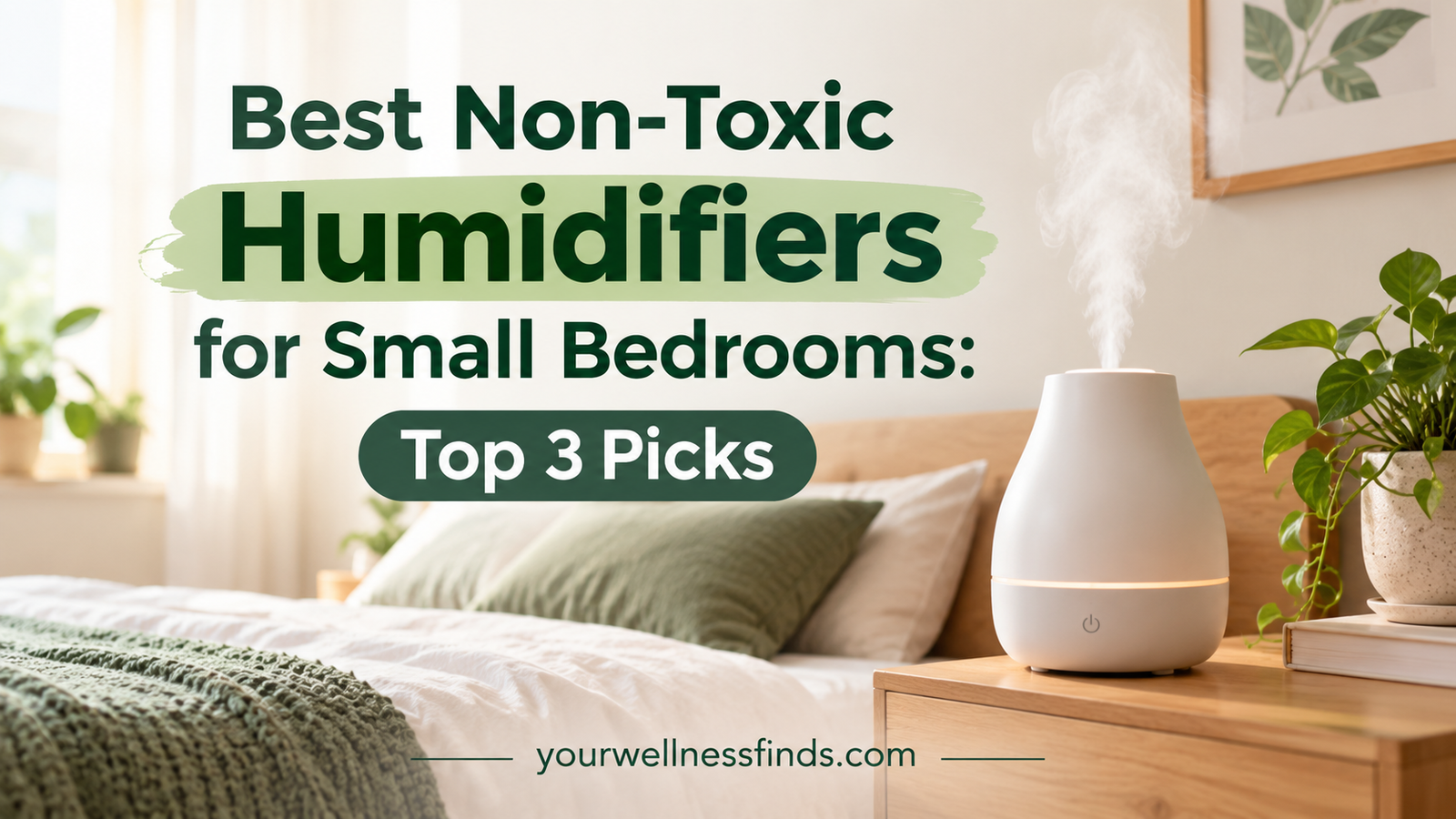
Choosing a humidifier for a small bedroom takes more than finding a quiet model. You also need a tank you can clean thoroughly, manageable mist output, and clear information about the materials.
My top pick for shoppers prioritizing a stainless steel water tank is the Carepod One. The LEVOIT Classic 160 is a compact alternative, while the Honeywell HCM350 offers evaporative humidification for people concerned about mineral dust.
However, none of these recommendations should be read as a guarantee that a product is completely “non-toxic.” This guide compares documented features and maintenance requirements, rather than making unverified chemical-safety claims.
Research note: This is a specification-based comparison, not a hands-on review. Amazon prices, sellers, and stock could not be confirmed. The links below are Amazon.com searches for the exact models.
What Does “Non-Toxic Humidifier” Actually Mean?
When shoppers search for a non-toxic humidifier, they usually want fewer concerns about plastic materials, dirty water, cleaning chemicals, and pollutants entering their bedroom air.
The water matters as much as the tank. According to the Environmental Protection Agency, ultrasonic humidifiers can release minerals and microorganisms from their reservoirs into the air. Evaporative models generally disperse less of these materials.
For this guide, the most useful features are:
- A reservoir with accessible surfaces.
- Clear manufacturer information about materials.
- Adjustable output for a small room.
- Straightforward cleaning instructions.
- A humidification method that fits your water and maintenance habits.
BPA-free construction is one material detail. It does not establish that an entire appliance is free of every potentially harmful substance.
Quick Comparison
| Humidifier | Best reason to consider it | Humidification type | Main trade-off |
|---|---|---|---|
| Carepod One | Stainless steel reservoir and accessible washable parts | Ultrasonic cool mist | Larger capacity than many small bedrooms need |
| LEVOIT Classic 160 | Compact 2.5-liter tank and simple top-fill design | Ultrasonic cool mist | Plastic construction; manufacturer lists a Proposition 65 warning |
| Honeywell HCM350 | Evaporative operation for reducing mineral-dust concerns | Evaporative cool moisture | Replacement wick filters and fan noise |
The recommendations reflect different priorities. A stainless steel tank, a small footprint, and reduced mineral dispersal are separate advantages—not interchangeable safety certifications.
1. Carepod One: Best for a Stainless Steel Water Tank
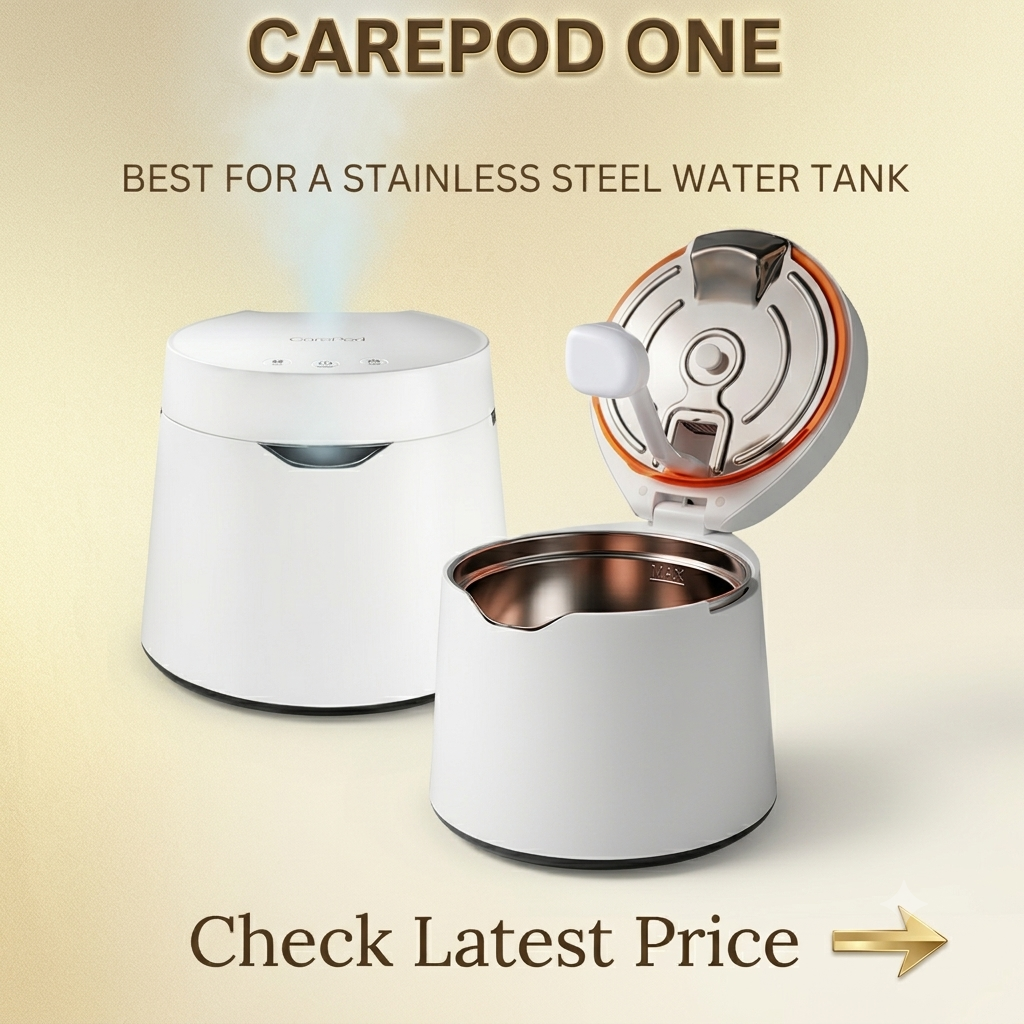
The Carepod One is my first choice for readers whose main priority is a stainless steel reservoir that is easy to access for cleaning.
Carepod lists a 4-liter tank, three ultrasonic mist settings, a timer, and coverage up to 500 square feet. The manufacturer also describes dishwasher-safe stainless steel components. Follow its instructions for the specific washable parts; the electrical housing should never be treated as dishwasher-safe. Stainless Steel Humidifier
Why consider it for a small bedroom?
Its appeal is the cleaning design. A removable reservoir with accessible surfaces can make it easier to inspect for deposits and clean thoroughly.
That is the practical reason to consider this model. Stainless steel does not make standing water automatically hygienic.
Advantages
- Stainless steel water reservoir.
- Adjustable mist settings.
- Accessible washable components.
- No replacement wick filter to manage.
Limitations
The 4-liter capacity may be more than you need for a small bedroom. Start with a low setting and check the room’s humidity rather than assuming longer operation is better.
It also remains an ultrasonic humidifier. A metal tank does not prevent minerals in the water from entering the mist.
Best for: Shoppers prioritizing reservoir materials and cleaning access over the smallest possible appliance.
Check latest price for Carepod One
2. LEVOIT Classic 160: Best Compact Option—with a Material Caveat
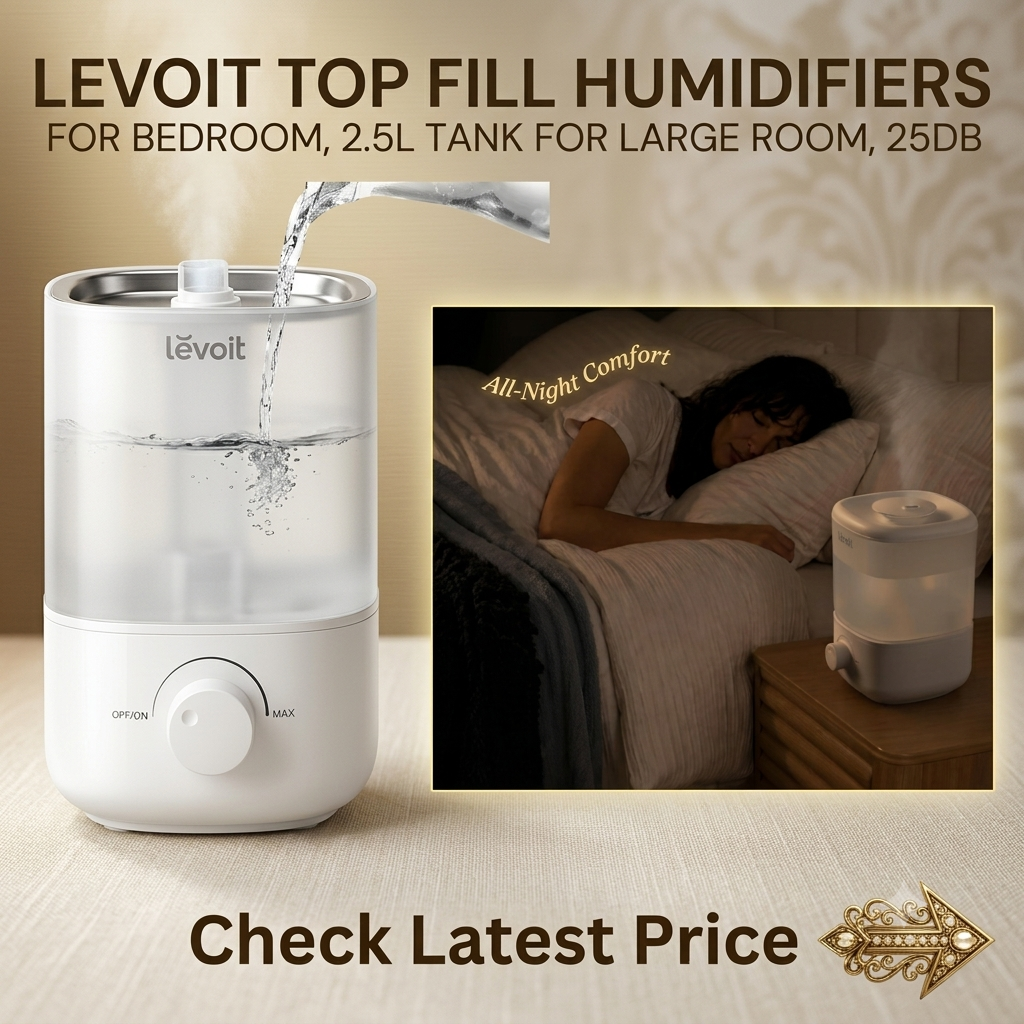
The LEVOIT Classic 160 is worth comparing if you want a smaller tank, straightforward controls, and easy refilling.
Its manufacturer lists a 2.5-liter capacity, top-fill design, adjustable control knob, automatic shut-off, and up to 25 hours of operation on the lowest setting. That runtime is a manufacturer maximum, not a promise under every bedroom condition. Levoit
Why consider it for a small bedroom?
The smaller tank and manual mist control make it a practical candidate for a bedside setup. The wide opening also gives you better access to the reservoir than designs with narrow filling holes.
Advantages
- Compact tank capacity.
- Convenient top filling.
- Accessible reservoir opening.
- Simple controls without an app.
- Automatic shut-off when water runs low.
The material caveat you should know
LEVOIT describes the construction as BPA-free. However, its product page also carries a California Proposition 65 warning mentioning lead. The page does not identify the exposure pathway or establish that lead enters the emitted mist. Still, that warning means it would be inappropriate to describe this model as conclusively “toxin-free.” Levoit
The manufacturer also states that the Classic 160 is not designed for essential oils. Levoit
Best for: Readers prioritizing compact size and simple operation who understand the limits of BPA-free claims.
Check latest price of LEVOIT Classic 160
3. Honeywell HCM350: Best Evaporative Alternative
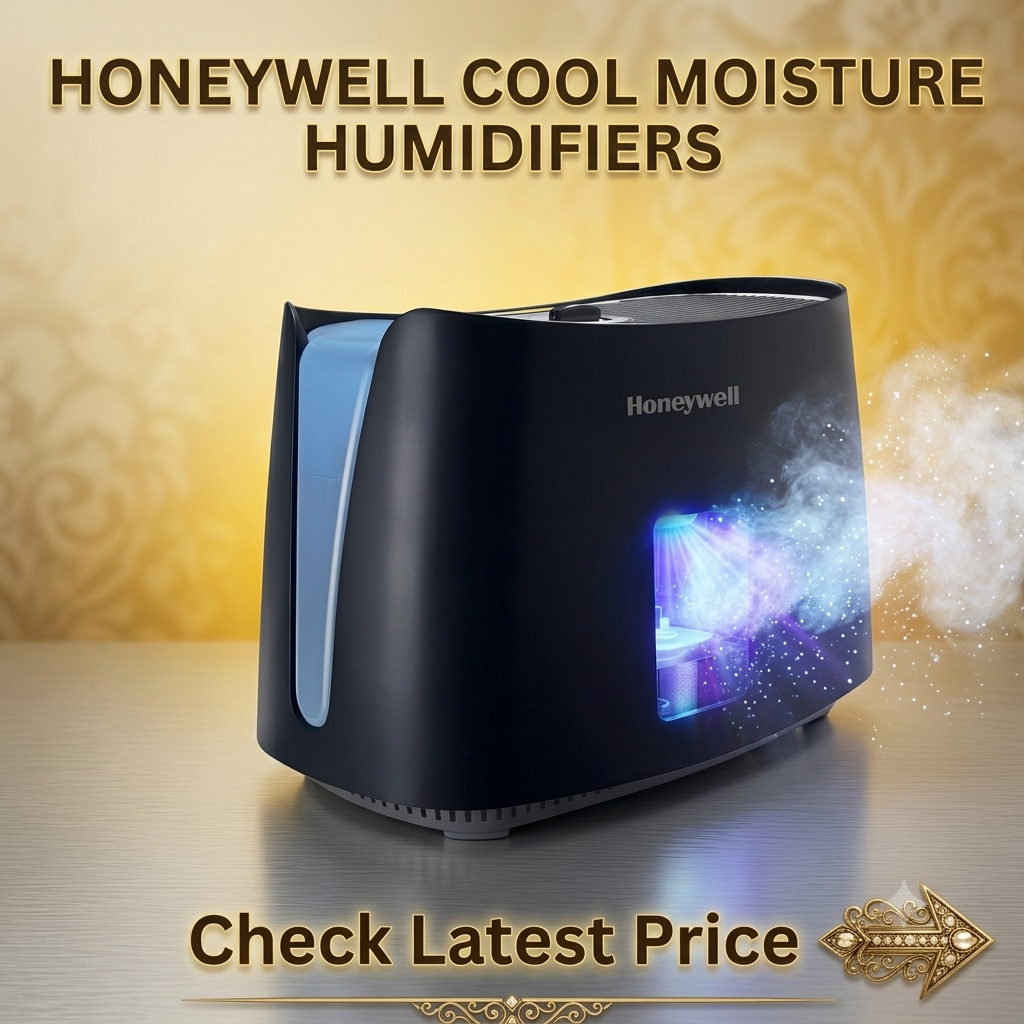
The Honeywell HCM350 uses a fan and a wet wick filter to add moisture through evaporation. Honeywell identifies it as a filtered cool-moisture humidifier with UV technology. Honeywell Plugged In
Why consider it for a small bedroom?
Its strongest advantage is its humidification method.
Unlike an ultrasonic appliance, an evaporative humidifier does not deliberately turn reservoir water into airborne droplets. The EPA states that evaporative humidifiers are not expected to disperse substantial amounts of minerals. This makes the HCM350 worth comparing if white dust is your main concern. US EPA
Advantages
- Evaporative operation.
- Three fan-speed settings.
- A low-speed option intended for quieter nighttime use.
- Replaceable wick filter.
Honeywell’s instructions identify low speed as the nighttime setting. honeywellpluggedin.com
Limitations
You need to maintain and replace the wick according to the instructions. Fan sound may also matter if you prefer a very quiet bedroom.
The UV feature should not be treated as permission to skip cleaning or as proof that the entire appliance stays sterile.
Best for: Readers concerned about mineral dust who are comfortable maintaining a wick filter.
Check latest price of Honeywell HCM350
How to Choose the Right Humidifier for Your Bedroom
Prioritize cleaning access
Before buying, look at the reservoir opening, removable parts, and cleaning instructions. Consider whether you can reach the tank walls and inspect the water-contact surfaces.
A design you can maintain consistently is more useful than an impressive feature list.
Match the appliance to your maintenance routine
An ultrasonic model requires attention to water mineral content. An evaporative model adds wick maintenance.
For example, the Carepod’s stainless steel tank may appeal to someone who wants accessible washable parts. The Honeywell may suit someone who would rather replace a wick than manage mineral dust from ultrasonic mist.
Check humidity instead of guessing
A small bedroom can become too damp when a humidifier runs continuously. Use a separate hygrometer and keep indoor relative humidity at or below 50%. Reduce operation if condensation appears on windows or nearby surfaces. US EPA
Compare ongoing costs
The purchase price is only part of the expense. Consider low-mineral water, replacement filters or parts, and the time required for cleaning.
Check the exact Amazon model, seller, warranty, and return policy before ordering.
A Simple Cleaning Routine
The EPA recommends the following precautions for portable humidifiers:
- Unplug the appliance before maintenance.
- Empty the tank, dry accessible surfaces, and refill with fresh water daily.
- Clean the unit every third day, following the manufacturer’s instructions.
- Rinse cleaning agents thoroughly before using the appliance again.
- Use low-mineral water, particularly in ultrasonic models.
These steps reduce potential exposure to contaminated water, mineral particles, and cleaning residues. US EPA
Frequently Asked Questions
Is a stainless steel humidifier automatically safer than a plastic one?
Not automatically. Stainless steel may offer useful cleaning and material advantages, but overall performance also depends on the complete design, water quality, maintenance, and humidity level.
The Carepod One earns its recommendation for its reservoir and cleaning features—not a verified guarantee of zero chemical exposure.
Does BPA-free mean non-toxic?
No. BPA-free describes one aspect of the materials. It does not answer every question about the appliance’s components or emissions.
Can an evaporative humidifier still get dirty?
Yes. Its tank holds water, and its wick needs maintenance. Reduced mineral dispersal does not eliminate the need for cleaning.
Should I buy the largest tank available?
A larger tank can reduce refilling, but it does not mean you should run the humidifier longer. For a small bedroom, adjustable output and measured humidity are more useful than maximum tank capacity.
Which One Should You Choose?
Choose the Carepod One if your priority is a stainless steel water reservoir and accessible cleaning.
Choose the LEVOIT Classic 160 if compact size and simple controls matter most, while taking its material disclosures into account.
Choose the Honeywell HCM350 if you want an evaporative alternative to ultrasonic mist and are willing to maintain replacement wick filters.
Whichever model you select, clean water, regular maintenance, and controlled humidity should guide how you use it.