
Blog
Red Night Light Benefits for Sleep & Melatonin

Can’t fall asleep after scrolling or turning on a bright hallway light? Your evening lighting may be the reason.
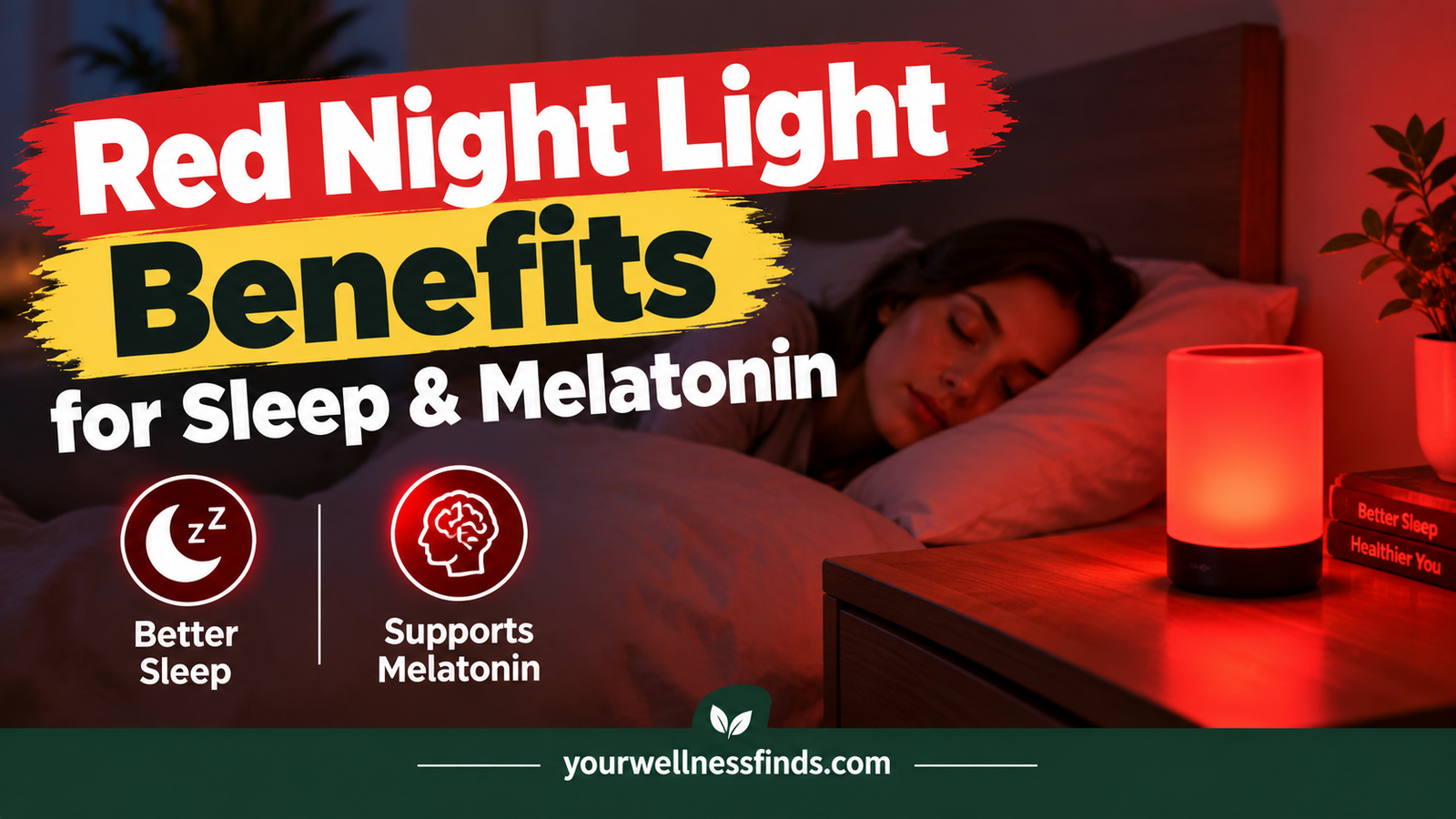
Quick answer: A red night light is less likely to disrupt melatonin than white or blue light. Red light has a long wavelength, so your body clock reacts to it far less. It won’t make you sleepy by itself. It simply lets you see in the dark without telling your brain it’s daytime.
Why Red Light Matters for Sleep and Melatonin
Melatonin is the hormone that signals to your body that night has arrived. Your brain releases it as the evening gets darker.
Light can switch this process off. Blue and cool white light, from phones, LEDs, and TVs, have the strongest effect. Special light-sensing cells in your eyes are most sensitive to blue wavelengths. When they detect it, your brain can delay melatonin release and shift your body clock later.
Red light sits at the other end of the spectrum. Research on light and the body clock has found that longer wavelengths suppress melatonin much less than short ones. That is why red light is often suggested for:
- Bathroom trips at night
- Nursery and feeding-time lighting
- Evening wind-down routines
- Reading before bed without bright lamps
One important point: red light does not boost melatonin. It just avoids blocking it. Very bright red light can still have some effect, so keep it dim.
How to Use a Red Night Light: Step-by-Step Recommendations
1. Choose a True Red Bulb or Night Light
Look for a light that is clearly red, not pink, orange, or “warm white.” Many “sleep-friendly” bulbs still give off a lot of blue light.
Pros:
- Minimal effect on melatonin
- Gentle on the eyes in the dark
- Cheap and easy to find
Cons:
- Colors look odd, so it’s poor for reading or detail work
- Some people find the color unpleasant
- Low-quality lights may not be a pure red
2. Place It Low and Away from Your Eyes
Put the light near the floor or in a hallway or bathroom. Avoid pointing it at your face or the bed. Indirect light is enough to see where you’re walking.
Pros:
- Less direct exposure to your eyes
- Safer for nighttime walking
- Keeps the room dark
Cons:
- Gives less light for tasks
- May need a plug-in or motion-sensor model
3. Keep the Brightness Low
A dim red glow is plenty. If you can read small text easily, the light is probably too bright.
Pros:
- Lowest chance of disturbing sleep
- Lower energy use
Cons:
- May be too dim for some older adults or anyone with vision problems
4. Switch to Red Light 1–2 Hours Before Bed
Dim the main lights in the evening, then use red light for the last part of your routine. This helps your body ease into night mode.
Pros:
- Builds a consistent wind-down habit
- Reduces bright-light exposure at the time it matters most
Cons:
- Takes some planning
- Other family members may need to agree
5. Add a Timer or Motion Sensor
A timer turns the light off after you fall asleep. A motion sensor only turns it on when needed.
Pros:
- No light on all night
- Great for bathroom trips
Cons:
- Sensors can trigger at the wrong time
- Slightly higher cost
Common Mistakes to Avoid
Using a “warm white” light and calling it red. Warm white still contains some blue light. If it doesn’t look truly red, it probably isn’t.
Making it too bright. A bright red light can still affect your sleep. Dim is better.
Ignoring screens. A red night light won’t help if you scroll on your phone in bed. Use night mode, lower the brightness, or put the phone away.
Leaving it on all night. Total darkness is best for sleep when possible. Use red light only when you need it.
Expecting it to cure insomnia. Red light is a helper, not a fix. Sleep depends on schedule, caffeine, stress, room temperature, and more.
Mixing it with bright overhead lights. Switching on a bright white light during a bathroom trip undoes the benefit.
Frequently Asked Questions
Does red light increase melatonin?
No. Current evidence suggests red light mostly avoids suppressing melatonin. It doesn’t make your body produce more.
Is red light better than blue light at night?
Yes, for protecting melatonin. Blue light has the strongest effect on your body clock, so it’s best avoided in the evening.
Can I sleep with a red night light on?
You can, but a completely dark room is usually better for sleep quality. If you want a light on, choose a very dim red one.
Are red night lights safe for kids and babies?
They are commonly used in nurseries because they are dim and gentle. Always follow the product instructions and keep cords and bulbs out of reach. Ask your pediatrician if you have questions.
Is red light therapy the same as a red night light?
No. Red light therapy uses stronger, targeted devices, often for skin or muscle recovery. A night light is a low-level light for visibility. Don’t treat them as the same thing.
What about amber or orange lights?
Amber and orange are better than white or blue, but they may still contain some shorter wavelengths. Red is the safest choice for melatonin.
Will it help with jet lag or shift work?
It may help you avoid extra light exposure during night hours, but it’s not a complete solution. A doctor or sleep specialist can give personal advice.
Conclusion: Next Steps
A red night light is a simple, low-cost way to protect your melatonin at night. It won’t force you to sleep, but it helps you avoid the light signals that keep you awake.
Your next steps:
- Swap one bright night-time light, such as the hallway or bathroom, for a dim red bulb.
- Lower the lights and screens 1–2 hours before bed.
- Keep your bedroom as dark as possible.
- Track how you sleep over the next two weeks.
If you have ongoing sleep problems, talk to a healthcare professional. Sleep trouble can have many causes, and a red light is only one small part of better rest.
This article is for general information only and is not medical advice.