
Blog
Is an Under-Desk Walking Pad Good for Small Spaces?

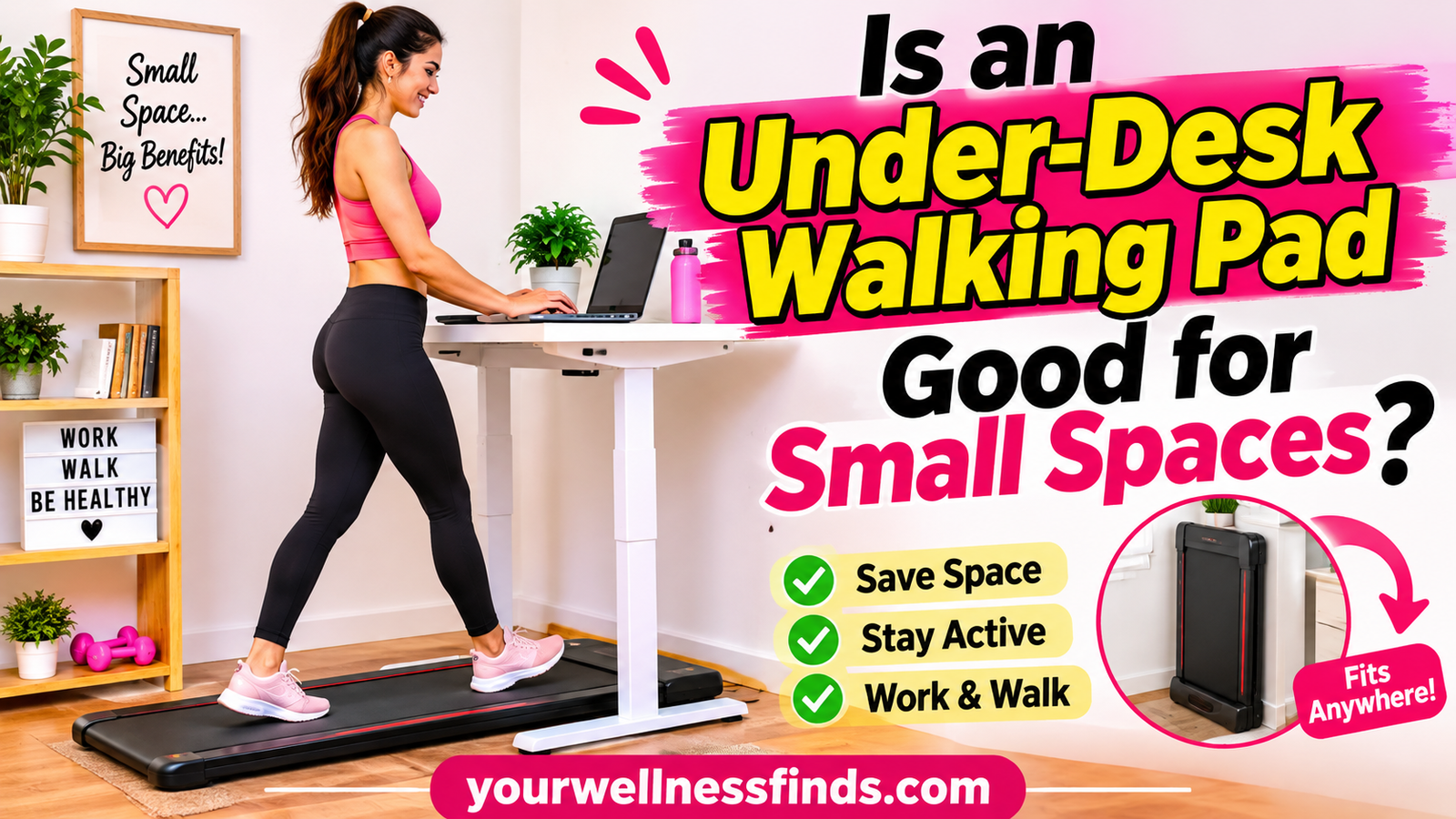
Sitting all day is hard on the body. Many people work from a bedroom corner, a small apartment, or a tiny home office. A full treadmill does not fit there. That is why the under desk walking pad has become so popular.
But is it really worth buying if you have limited space? In this review, we look at how walking pads work, who they suit, what to check before you buy, and the downsides most listings do not mention.
What Is an Under Desk Walking Pad?
A walking pad is a slim, foldable treadmill made for slow walking. Most have no handrails or only a small one. They are built to slide under a standing desk or stand upright against a wall.
Most models run at low speeds, usually up to about 3.5 to 4 mph. That is fine for walking while you work. It is not meant for running.
Most walking pads come with:
- A remote control or a button panel
- A small LED display for speed, time, and distance
- A folding or low-profile frame
- Wheels for moving the pad around
Why Walking Pads Make Sense for Small Spaces
Small homes need furniture that does more than one job. A walking pad fits that idea well.
It stores easily. Many models are only a few inches tall. You can slide one under a bed, behind a sofa, or into a closet. Some fold in half and stand against a wall.
It works with a standing desk. If you already have a height-adjustable desk, the pad goes right underneath. You walk slowly while you answer emails or join calls.
It is a lot cheaper than a full treadmill. Walking pads usually cost much less than a regular treadmill, and they take up far less room.
It adds light movement to your day. Gentle walking can help you break up long sitting periods. Health authorities generally encourage regular movement, but a walking pad is not a replacement for medical advice.
Key Features to Check Before You Buy
Not all walking pads are equal. Here is what matters most when space is tight.
1. Size and Belt Length
Check the full footprint, not just the belt. Measure the space under your desk and the space where you will store the pad. Look at belt length too. A very short belt can feel cramped, especially for taller people.
2. Motor Power and Noise
Quiet matters if you share a room, live in an apartment, or take calls. Check the motor rating and read customer feedback about noise. Cheaper motors can get louder at higher speeds or under heavier users.
3. Weight Capacity
Always check the maximum user weight listed by the manufacturer. Choose a pad with some safety margin above your weight.
4. Height and Desk Clearance
This is a common mistake. You need enough room for the pad plus your feet when you walk. Measure your desk at its lowest and highest settings. Your elbows should still rest comfortably at keyboard height while you walk.
5. Remote and Controls
A simple remote is useful. You do not want to bend down to change speed. Check that the remote is easy to use and that the pad has a clear stop option.
6. Folding Design and Weight
A pad that folds is easier to store. But heavy pads are hard to move. Check the product weight and whether it has wheels, especially if you plan to move it every day.
7. Warranty and Support
Look at motor and frame warranty terms. Read what customers say about service when something goes wrong.
Pros and Cons
Pros
- Saves space compared with a regular treadmill
- Easy to store under furniture
- Lower price than most full-size treadmills
- Encourages light movement during work
- Works well with a standing desk
- Most models are simple to set up
Cons
- Limited top speed, so it is not for running
- Typing and mouse work can feel harder at first
- Some models are noisy
- Short belts can feel tight for taller users
- You need a standing desk or a high enough desk
- Cheap models may have weaker motors and shorter life
Is It Worth It for Small Spaces?
For most people with limited space, yes, a walking pad can be worth it. But only if you will really use it.
A walking pad is a good fit if:
- You work from home and sit for long hours
- You already own a standing desk, or plan to buy one
- You live in an apartment or a small home
- You want light daily movement, not intense workouts
- You can accept slow, steady walking
It may not be right if:
- You want to run or do high-intensity training
- You do not have a desk that can be raised
- You live in a building with strict noise limits and cannot test the pad first
- You do not have a spot to store it
The best walking pad is the one you use often. A pad that sits unused in the closet is not a good deal at any price.
Common Problems Buyers Report
Customer feedback on walking pads often points to the same issues:
- Noise on hard floors. Place a mat under the pad to reduce vibration.
- Belt drifting to one side. Many models allow belt adjustment. Check the manual.
- Remote problems. Keep spare batteries and read the pairing steps.
- Slow typing at first. Most users say it gets easier with practice, so start at a very slow speed.
- Too little clearance. Measure your desk before you order.
Tips for Using a Walking Pad in a Small Space
- Start slowly, around 1 mph, and build up over time.
- Wear comfortable, flat shoes with good grip.
- Use a mat to protect the floor and cut noise.
- Keep the area around the pad clear.
- Do short sessions at first, such as 10 to 15 minutes.
- Raise your monitor to eye level so you do not strain your neck.
- Keep a clear path to the stop button.
Safety Notes
If you have a medical condition, balance problems, or an injury, talk to your doctor before using a walking pad. Always read the manufacturer’s instructions for setup, weight limits, and safe use. Do not use the pad on thick carpet unless the manufacturer says it is allowed. Keep children and pets away while it is running.
How to Choose the Right Model
Use this quick checklist before you click “Buy”:
- Measure your desk clearance and storage space
- Check the belt length against your height and stride
- Compare noise feedback in verified reviews
- Confirm the weight capacity
- Look for a remote and a clear stop function
- Read warranty terms
- Check the return policy in case it does not fit your space
When you compare models on Amazon, read the most recent reviews and the lower-star ones. They often show problems you will not see in the product description.
Final Verdict
An under desk walking pad can be a smart buy for small spaces. It is compact, affordable compared with a full treadmill, and easy to pair with a standing desk. It will not replace a proper workout routine, and it has limits on speed, noise, and desk setup.
If you work at a desk, have limited room, and want a simple way to move more during the day, it is worth a serious look. Measure first, check the specs, and choose a model with solid feedback on noise and durability.
Frequently Asked Questions
Can you use a walking pad in a small apartment?
Yes. Most models are slim and can be stored under a bed or sofa, or folded against a wall. Use a mat and keep speeds low to reduce noise.
Do you need a standing desk for a walking pad?
It is the easiest setup. A regular fixed-height desk usually does not leave enough clearance. Some people use the pad without a desk, just for walking while watching TV.
Are walking pads loud?
Noise varies by model, motor, and user weight. Check customer reviews for noise comments, and use a mat for extra damping.
Can you run on a walking pad?
Most are made for walking only. Check the manufacturer’s maximum speed and instructions. Do not run on a model that is not rated for it.
How long should you walk each day?
That depends on your health and goals. Start with short sessions and increase slowly. Ask your doctor for advice if you are unsure.
Is a walking pad better than a regular treadmill?
For small spaces, usually yes, because it is smaller and easier to store. A regular treadmill is better if you want to run or need handrails and incline.
Always check the manufacturer’s instructions and any local requirements for your building before buying or using exercise equipment. This article is for general information and is not medical advice.
Disclosure: As an Amazon Associate, we earn from qualifying purchases. If you buy through links on this page, we may earn a small commission at no extra cost to you.